
Virtual Pūrākau: Co-designing Adaptive Cinematic VR for Culturally Responsive Landscape Interpretation at Te Rau Aroha
DOI:
https://doi.org/10.34900/lr.v22i2.1381Keywords:
cinematic virtual reality, CVR, landscape interpretation, cultural landscapes, digital storytelling, Māori heritage, co-designAbstract
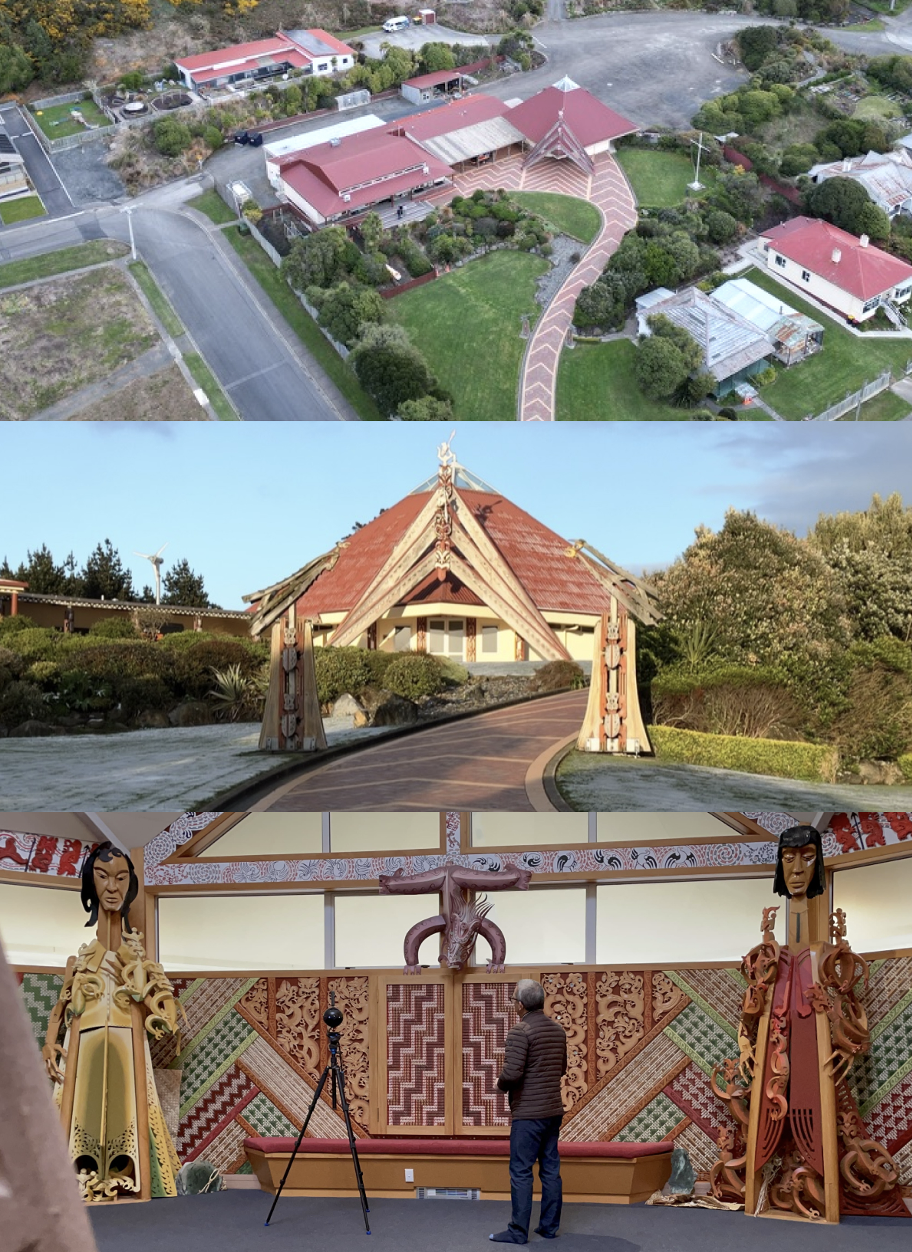
Landscapes hold cultural narratives, but conventional static interpretation struggles to communicate them. This research explored adaptive cinematic virtual reality (CVR) as a spatial storytelling tool, developed with kaikōrero (Māori storytellers) at Te Rau Aroha marae in Motupōhue Bluff, Aotearoa New Zealand. The results show that immersive storytelling must move beyond a one-size-fits-all model. By identifying viewer personas and adapting the narrative to them, CVR can support culturally responsive interpretation that respects place-based Indigenous knowledge. Immersive media should therefore be treated not as a technical tool but as a platform for communicating landscape narratives. For landscape architecture, adaptive digital storytelling offers a complementary and non-extractive method of interpretation. It also opens new options for community consultation, site interpretation and stakeholder engagement in the public realm.
Downloads
Downloads
Published
How to Cite
Issue
Section
License
Copyright (c) 2026 Kris Tong

This work is licensed under a Creative Commons Attribution 4.0 International License.
Authors who publish with this journal agree to the following terms:- Authors retain copyright and grant the journal right of first publication with the work simultaneously licensed under a Creative Commons Attribution License that allows others to share the work with an acknowledgement of the work's authorship and initial publication in this journal.
- Authors are able to enter into separate, additional contractual arrangements for the non-exclusive distribution of the journal's published version of the work (e.g., post it to an institutional repository or publish it in a book), with an acknowledgement of its initial publication in this journal.
- Authors are permitted and encouraged to post their work online (e.g., in institutional repositories or on their website) prior to and during the submission process, as it can lead to productive exchanges, as well as earlier and greater citation of published work (See The Effect of Open Access).