
Blue Biophilic Place and Island Placemaking in the Pacific: the Case of Eua Island, Tonga
DOI:
https://doi.org/10.34900/lr.v22i1.1368Abstract
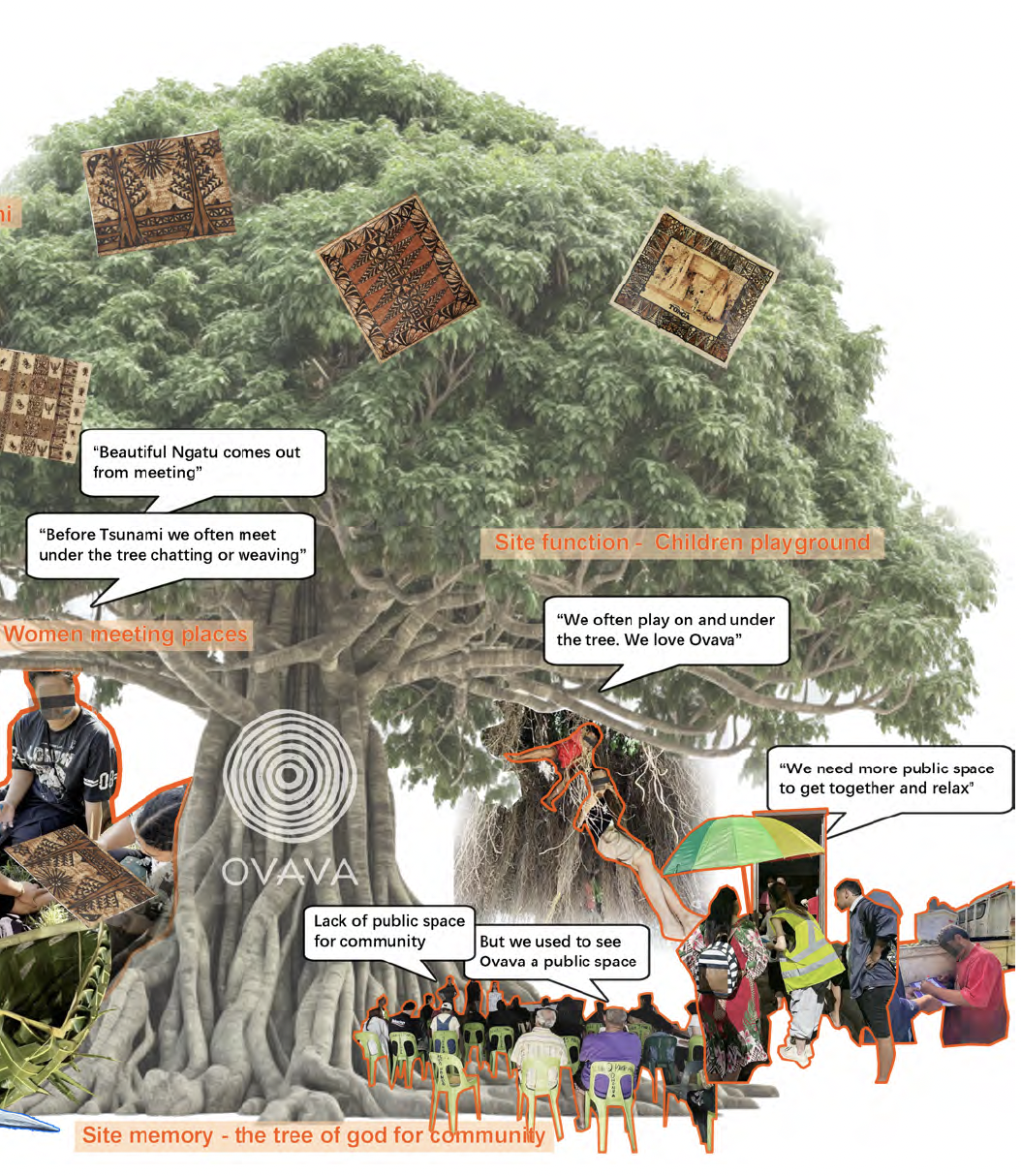
The Hunga Tonga–Hunga Ha'apai volcano erupted in 2022 triggering a deadly tsunami and causing widespread disaster. Coastal communities in small Pacific Island countries were seriously affected including the Ohonua community in Eua Island, the Kingdom of Tonga. A coastal community, Ohonua faced the double burden of an intensifying weather and sea level rise due to climate change exacerbating an already vulnerable community during disaster recovery. A Placemaking Sandbox was delivered in July 2024 where students explore re-connection, place attachment, and healing with the Ohonua community. This paper presents an auto-ethnographic critical reflection of islandness as a nature-based placemaking framework to build community resilience post-disaster. Examining Eua’s cultural islandscape and how islandness can be an expression of resilience, we highlight blue nature-based placemaking project, where Islandness is expressed in fostering collective leadership in building interconnection and networks; recognising that residents are place experts sharing intergenerational storytelling, prioritising the value of blue biocultural connection and highlighting resilience that builds on blue natural assets. The encounter with the Ohonua community offers fresh insights on island place-making and blue urbanism in the shaping of being and belonging as the community picked up the pieces after the disaster.
Downloads
Downloads
Published
How to Cite
Issue
Section
License
Copyright (c) 2026 Iderlina Mateo-Babiano, Adelaide Lee, Anh Nguyen , Shiyi Zhang

This work is licensed under a Creative Commons Attribution 4.0 International License.
Authors who publish with this journal agree to the following terms:- Authors retain copyright and grant the journal right of first publication with the work simultaneously licensed under a Creative Commons Attribution License that allows others to share the work with an acknowledgement of the work's authorship and initial publication in this journal.
- Authors are able to enter into separate, additional contractual arrangements for the non-exclusive distribution of the journal's published version of the work (e.g., post it to an institutional repository or publish it in a book), with an acknowledgement of its initial publication in this journal.
- Authors are permitted and encouraged to post their work online (e.g., in institutional repositories or on their website) prior to and during the submission process, as it can lead to productive exchanges, as well as earlier and greater citation of published work (See The Effect of Open Access).