
Floating Islands, Moving Ecologies: Ocean-based Intercultural Learning as an Archipelagic Heritage Method
DOI:
https://doi.org/10.34900/lr.v22i1.1366Keywords:
Ocean-based learning, Archipelagic thinking, Living maritime heritage, Moving ecologies, IslandnessAbstract
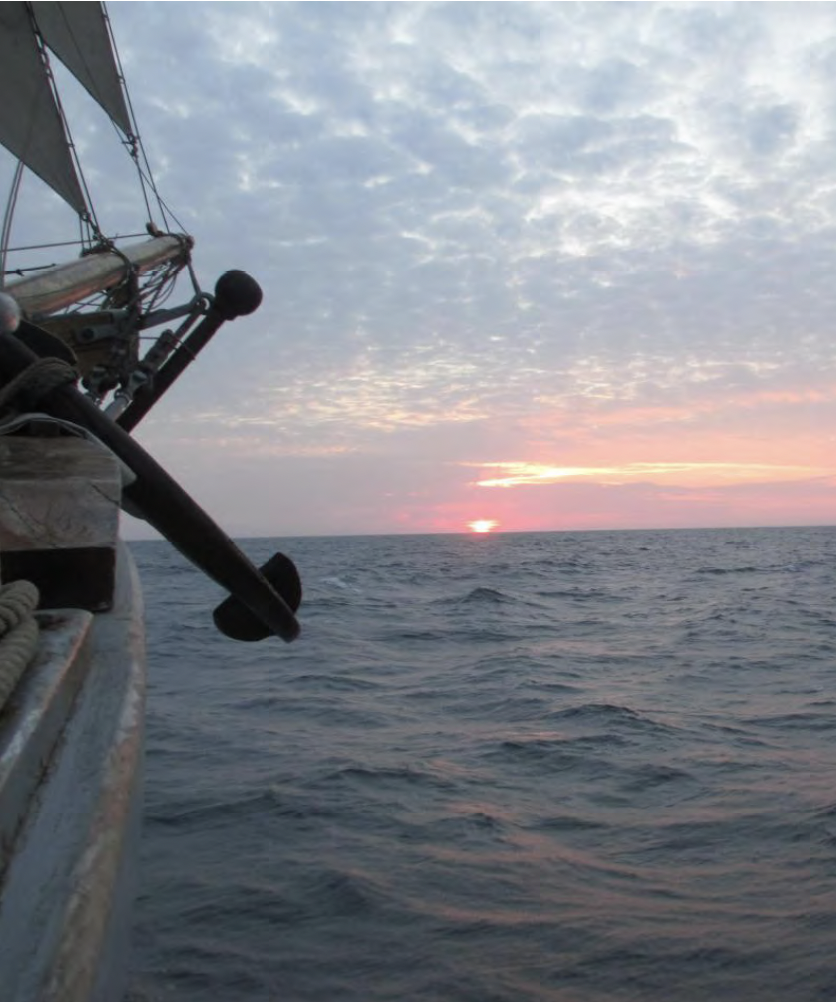
Oceans have often been treated as peripheral to learning and heritage, framed as unstable spaces separating land-based cultures and institutions. Recent work in island studies and the blue humanities has challenged this view, yet questions remain as to how learning and heritage can be methodologically examined in mobile, oceanic environments. This article explores this methodological challenge by examining ocean-based learning aboard international tall ships through an archipelagic lens. Drawing on ocean-based ethnography conducted during an international sail-training voyage, the study advances the Archipelagic Heritage Method (AHM) to analyse learning and heritage as processes unfolding within moving ecologies. The tall ship is approached as a floating island—a bounded yet permeable environment shaped by ecological forces, embodied labour and intercultural proximity. Empirical analysis shows how storytelling, ritualised labour and embodied mapping operate as situated practices through which participants orient themselves socially, ecologically and culturally at sea. The article argues that ocean-based learning cultivates forms of islandness grounded in movement, ecological attunement and relational dependence.
Downloads
Downloads
Published
How to Cite
Issue
Section
License
Copyright (c) 2026 Yujun Xu

This work is licensed under a Creative Commons Attribution 4.0 International License.
Authors who publish with this journal agree to the following terms:- Authors retain copyright and grant the journal right of first publication with the work simultaneously licensed under a Creative Commons Attribution License that allows others to share the work with an acknowledgement of the work's authorship and initial publication in this journal.
- Authors are able to enter into separate, additional contractual arrangements for the non-exclusive distribution of the journal's published version of the work (e.g., post it to an institutional repository or publish it in a book), with an acknowledgement of its initial publication in this journal.
- Authors are permitted and encouraged to post their work online (e.g., in institutional repositories or on their website) prior to and during the submission process, as it can lead to productive exchanges, as well as earlier and greater citation of published work (See The Effect of Open Access).