
Fields of potential: recovering hidden Chains of Ponds in a rapidly urbanising landscape
DOI:
https://doi.org/10.34900/lr.v21i2.1322Keywords:
Heat island, Cumberland Plain, critical mapping, blue green infrastructure, water sensitive urban designAbstract
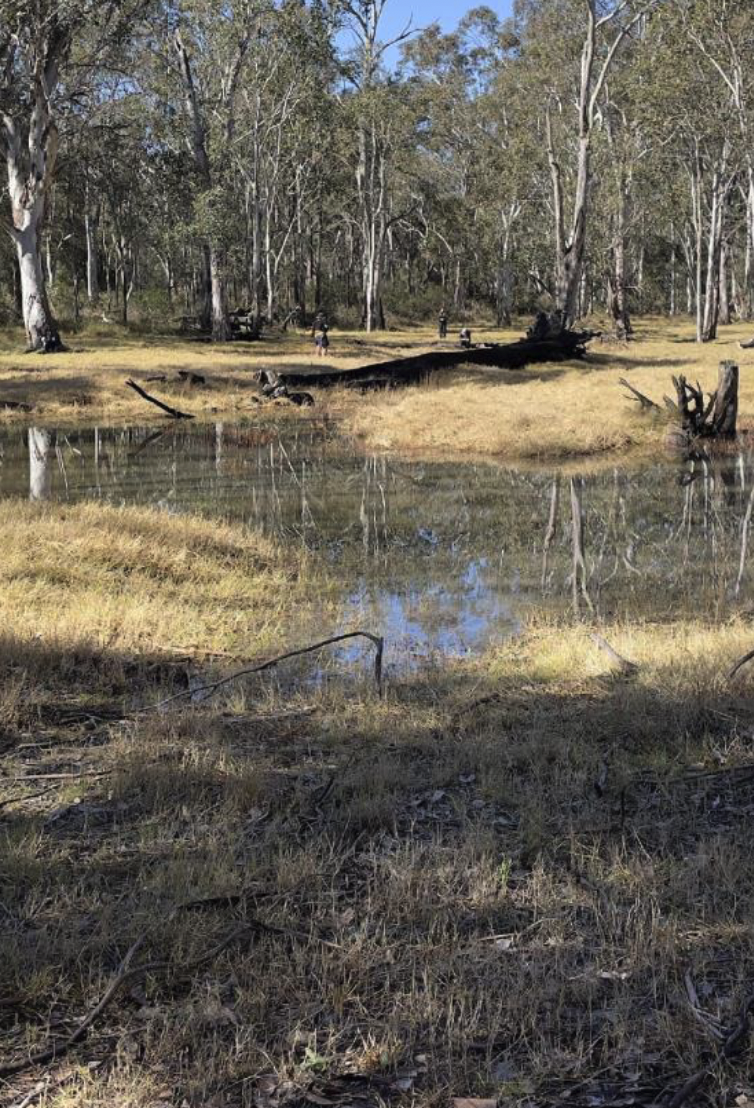
A Chain of Ponds is an ancient, mostly underground and almost forgotten riparian system that once sustained abundant, biodiverse life in many of the warm and dry regions of Australia. Unlike incised water courses, it forms swampy meadows that detain water and encourage infiltration, which cleans water and mitigates flooding and erosion. It also cools the atmosphere. This critical landscape system was once an extensive and prolific network of slow water movement in the Cumberland Plain in Western Sydney, Australia. It has now, unfortunately, been heavily degraded by colonising agricultural practices and Sydney’s inexorable urban sprawl. Drawing on the link between groundwater and a cool environment, this paper looks into the potential for regenerating Chains of Ponds where, due to urbanisation, hard, water-excluding surfaces and the heat island effect are proliferating. The research reassembled a Chain of Ponds history of the Plain from nineteenth-century parish maps and mid-twentieth-century aerial photos, supported by ground truthing and heat analysis. The findings form the basis of a discussion on the potential of this endemic landscape system, with its intrinsic adaptability, to address the vulnerabilities that urbanisation creates for both fragile landscape systems and the increasing population of residents and workers.
Downloads
Downloads
Published
How to Cite
Issue
Section
License
Copyright (c) 2025 Penny Allan, Martin Bryant, Andrew Toland

This work is licensed under a Creative Commons Attribution 4.0 International License.
Authors who publish with this journal agree to the following terms:- Authors retain copyright and grant the journal right of first publication with the work simultaneously licensed under a Creative Commons Attribution License that allows others to share the work with an acknowledgement of the work's authorship and initial publication in this journal.
- Authors are able to enter into separate, additional contractual arrangements for the non-exclusive distribution of the journal's published version of the work (e.g., post it to an institutional repository or publish it in a book), with an acknowledgement of its initial publication in this journal.
- Authors are permitted and encouraged to post their work online (e.g., in institutional repositories or on their website) prior to and during the submission process, as it can lead to productive exchanges, as well as earlier and greater citation of published work (See The Effect of Open Access).