
Against Architectures of Degradation: Pōhaku and Protection on Mauna Kea
Abstract
This paper examines practices of erasure and resistance through the use of pōhaku (stone) on the Mauna Kea volcano Hawai‘i island, and within the boundaries of the Mauna Kea Science Reserve. Mauna Kea is a sacred site point of genealogical connection for Kānaka Maoli, it is also a contested landscape: Crown and Government land seized from the Hawaiian Kingdom in 1898, held in trust by the territorial and then state government, and leased in 1968 to the University of Hawai‘i to host an ever-expanding astronomy industry. Since the inception of the Mauna Kea observatories, Kānaka Maoli kia‘i (protectors) and environmental activists have resisted the increasing construction of large scale telescopes on Mauna Kea for both their degradation of the land and their violation of Hawaiian sovereignty. One way they have done that is through the built environment.
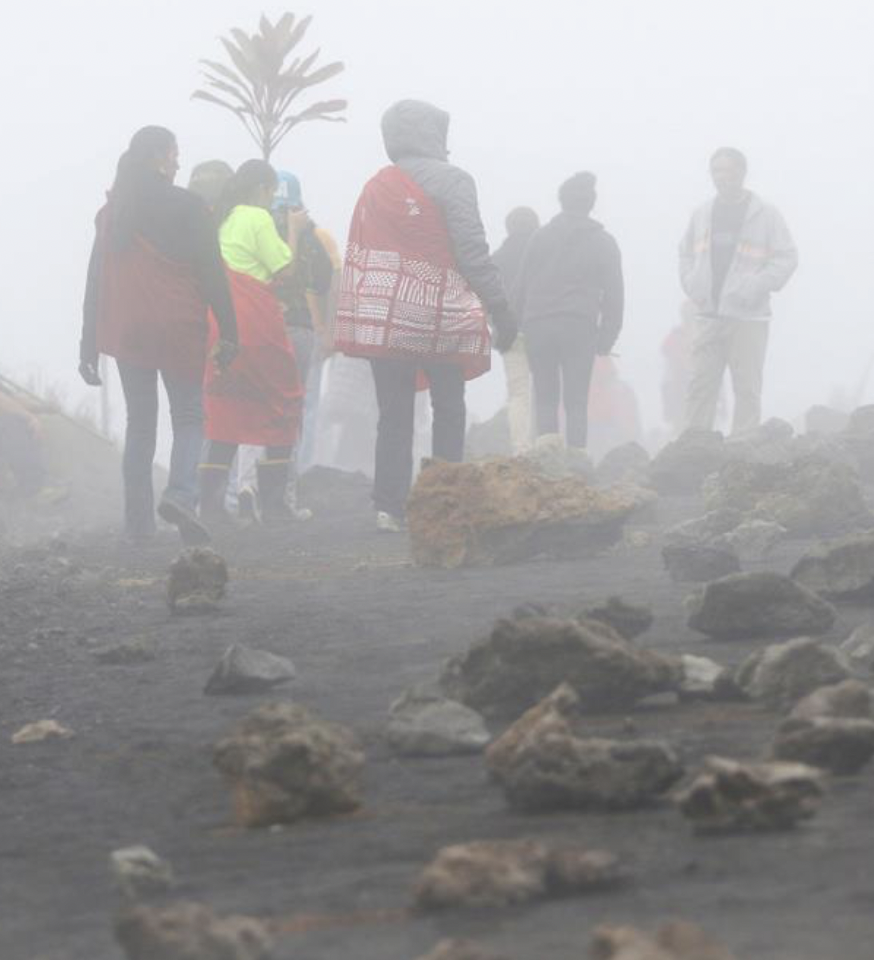
Pōhaku is a material that registers and refuses settler colonial attempts to expropriate land and control Indigenous political relationships to place. Through oral history and archival research this paper centers the stones erected as shrines within the jurisdiction of the Mauna Kea Science Reserve removed by Department of Land and Natural Resources officers and discounted by archaeologists only to be returned again and again by kia‘i. It brings these stones into dialogue with the Hale Pōhaku (stone house) architecture built for the astronomy industry in the 1970s and 80s, which became a site for direct action against the construction of the massive Thirty Meter Telescope from 2014-2019. During protests pōhaku became an essential architecture of protection that blocked construction equipment from ascending the road.
Downloads
Downloads
Published
How to Cite
Issue
Section
License
Copyright (c) 2025 Caitlin Blanchfield

This work is licensed under a Creative Commons Attribution 4.0 International License.
Authors who publish with this journal agree to the following terms:- Authors retain copyright and grant the journal right of first publication with the work simultaneously licensed under a Creative Commons Attribution License that allows others to share the work with an acknowledgement of the work's authorship and initial publication in this journal.
- Authors are able to enter into separate, additional contractual arrangements for the non-exclusive distribution of the journal's published version of the work (e.g., post it to an institutional repository or publish it in a book), with an acknowledgement of its initial publication in this journal.
- Authors are permitted and encouraged to post their work online (e.g., in institutional repositories or on their website) prior to and during the submission process, as it can lead to productive exchanges, as well as earlier and greater citation of published work (See The Effect of Open Access).