
The Future of a cemetery in a warming climate
DOI:
https://doi.org/10.34900/lr.v21i2.1240Keywords:
design, material speculation, microclimate, landscape architecture, planting designAbstract
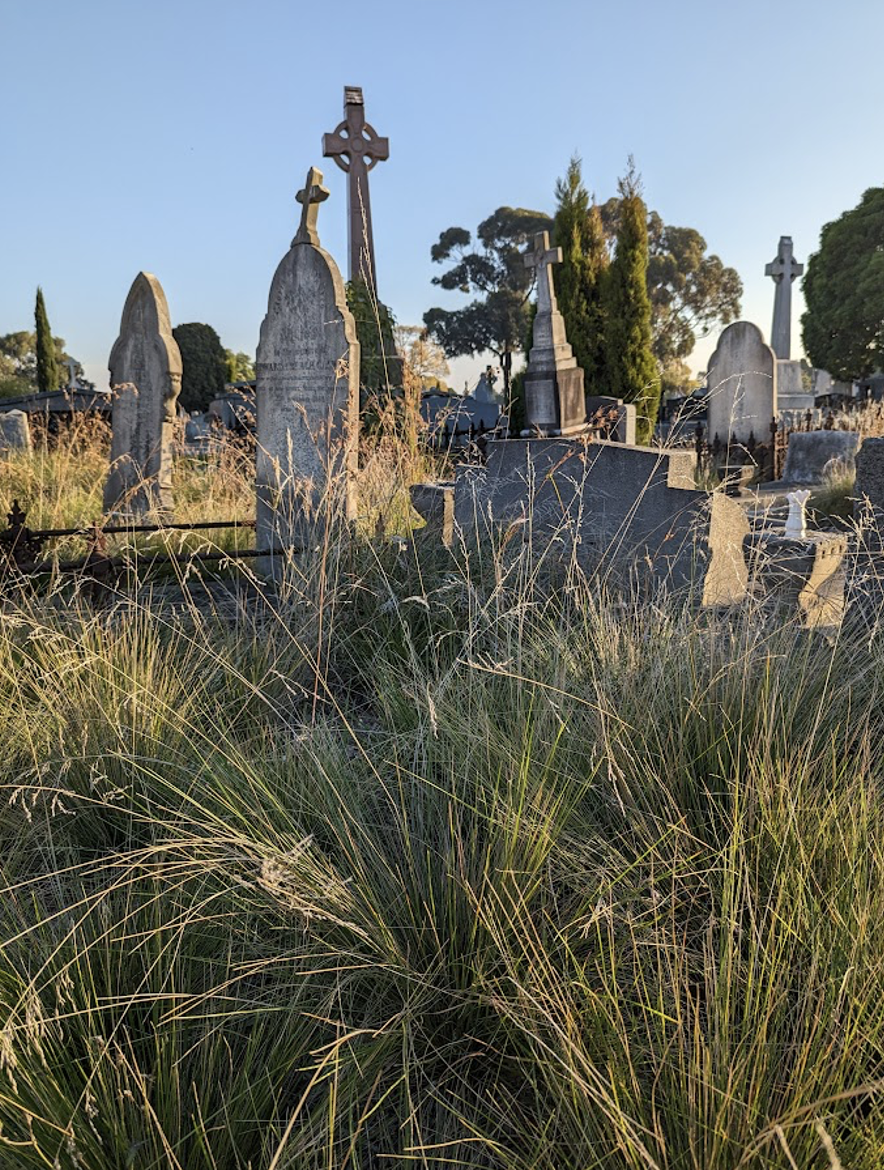
his paper utilises the complex physical and cultural landscape of an inner urban cemetery in Melbourne to position microclimate materiality as a crucial contemporary design framework. Beginning with key concepts from design literature on the design potentials of heat, air and atmosphere, this theory-led framing suggests that small-scale fluctuations in temperature over time can offer insight into spatial and temporal diversity as qualities that can be leveraged through design. This position is further explored in the specific social and environmental context of the Melbourne General Cemetery. This case illustrates the relevance of microclimate materiality for landscape design in navigating urban pressures in our time of climate change – especially in complex sites where cultural, social and environmental values overlap
Downloads
Downloads
Published
How to Cite
Issue
Section
License
Copyright (c) 2025 Wendy Walls

This work is licensed under a Creative Commons Attribution 4.0 International License.
Authors who publish with this journal agree to the following terms:- Authors retain copyright and grant the journal right of first publication with the work simultaneously licensed under a Creative Commons Attribution License that allows others to share the work with an acknowledgement of the work's authorship and initial publication in this journal.
- Authors are able to enter into separate, additional contractual arrangements for the non-exclusive distribution of the journal's published version of the work (e.g., post it to an institutional repository or publish it in a book), with an acknowledgement of its initial publication in this journal.
- Authors are permitted and encouraged to post their work online (e.g., in institutional repositories or on their website) prior to and during the submission process, as it can lead to productive exchanges, as well as earlier and greater citation of published work (See The Effect of Open Access).